The medicine cabinet audit: what to keep, toss, and never share
A room-by-room reason to finally clear out that overstuffed press, and how to do it safely.
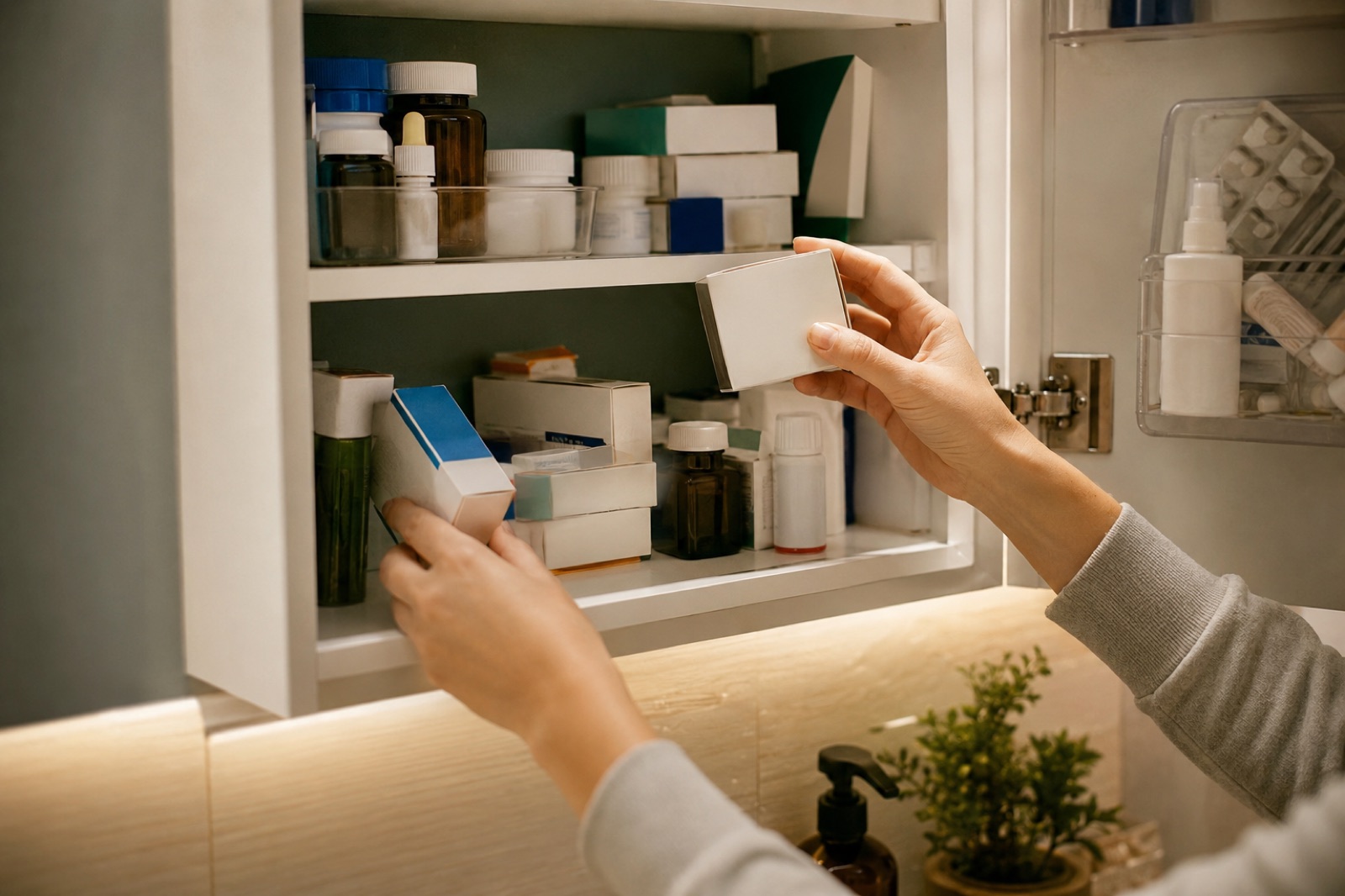
Every house has one. A press, a drawer, an old biscuit tin, that’s become the unofficial home for anything even vaguely medical. Half a course of antibiotics from last winter, three different painkillers, a thermometer that needs new batteries, and something in a blister pack nobody can identify anymore. It’s not laziness that gets us here, it’s just life. But it’s worth twenty minutes of anyone’s Saturday to sort it out properly.
A messy cabinet is not just clutter. It’s a small accident waiting for the right moment.
Start with the expiry dates
Start with the expiry dates, because they’re more useful than most people realise. That date is not a guess, it’s the point up to which the manufacturer has tested and stood over the medicine being both safe and working at full strength. After it, tablets don’t usually turn dangerous overnight, but they can quietly lose potency, which matters a great deal if it’s an antibiotic, an EpiPen, or anything else where you need the full dose to actually work. Creams and liquids are a bit different again, once opened, many have a shorter practical life than the printed date suggests, because air and moisture get in. If in doubt about a specific item, it takes thirty seconds to ask us next time you’re in.
Leftover antibiotics deserve their own word, because this is the one habit worth breaking for good. Antibiotics are prescribed for a specific infection, at a specific dose, for a specific length of time, and that combination is what makes them work. Stopping early and keeping the rest for next time, or passing them to a family member with what looks like the same thing, means you’re both giving a smaller, less effective dose and helping bacteria get better at surviving it. That’s how resistance builds up over time, and it’s a genuinely serious problem across all of medicine, not just for the person taking the leftover course. The safest rule is the simplest one, a course of antibiotics is for one illness, one person, once.
Bring the toss pile back to us
Once you’ve made your keep and toss piles, resist the urge to bin the toss pile or flush anything down the toilet. Medicines that go into landfill or wastewater don’t just disappear, they can end up in soil and waterways, and pills sitting loose in general rubbish are a real risk if there are children, visitors, or pets in a house at any point. The right move is the easy one, bring unused or out of date medicines back to us at the pharmacy, in their original packaging if you still have it. We take them off your hands with no fuss, no questions about why you have three unopened boxes of the same thing, and dispose of them properly and safely. It’s a service every pharmacy in the country offers, and it takes less time than the walk to the bin.
Setting the cabinet up properly
Once the audit’s done, think about how the cabinet is organised, not just what’s in it. Keep everyday items like paracetamol, plasters, and rehydration sachets somewhere easy to reach, but keep anything prescription-only, anything for adults only, or anything that looks like a sweet, up high and out of a child’s line of sight and reach. Original boxes and inserts are worth keeping rather than tipping loose tablets into one big tub, because that box tells you what it is, what it’s for, and when it runs out. If more than one person in the house is on regular medication, a simple labelled box for each person, or a weekly pill organiser, saves an awful lot of confusion at half seven in the morning.
None of this needs to be a big production. A proper cabinet clear-out once or twice a year, ideally around the same time as changing smoke alarm batteries or doing the school bag shop, keeps everything current and nobody guessing. And if you come across something you can’t identify, or you’re not sure whether to keep it, that’s exactly the kind of small question we’re happy to answer at the counter, no appointment needed.
Still wondering about something?
Ring 061 454 000 and ask for the pharmacist — that’s what we’re here for.
Worth a read next
Health Hub