
Why your blood pressure reading can swing in a single day
Ever wonder why your blood pressure reading was high at the doctor’s but fine at home? Here’s what’s actually going on.
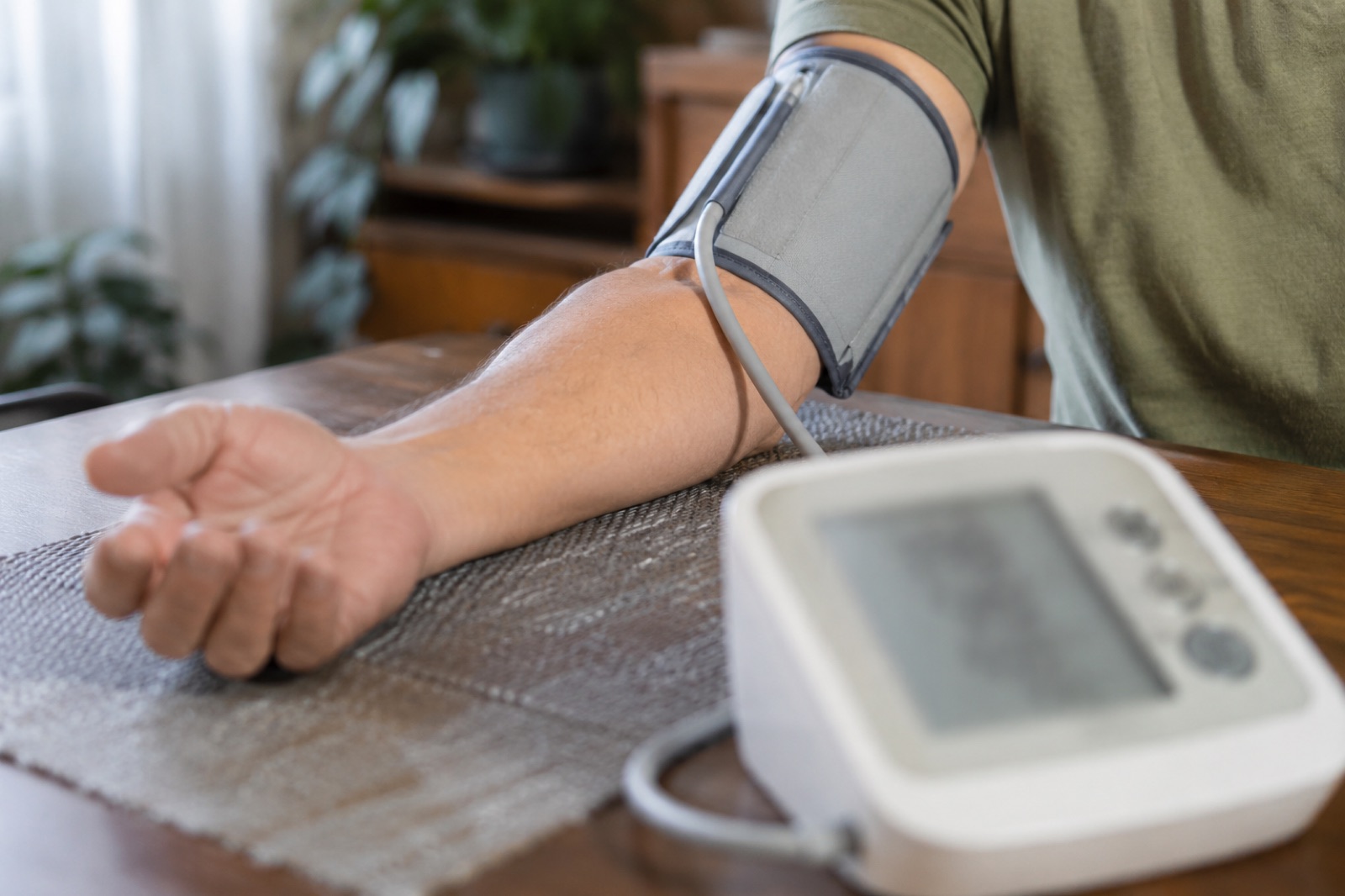
You sit down, the cuff tightens, and the number that flashes up is higher than you expected. Before you panic and start rearranging your life around it, take a breath. A single blood pressure reading is a snapshot, not a verdict, and the number on the screen can be nudged up or down by things that have nothing to do with your long-term health at all.
One reading tells you what your blood pressure was for ten seconds. Not what it is.
The white coat effect
There is a well-recognised phenomenon called white coat syndrome, and it is not just a figure of speech. Sitting in a doctor’s surgery, waiting for a nurse to take your blood pressure, genuinely raises it for some people, purely through the anxiety of the setting itself. The body reacts to a medical environment the same way it reacts to any mildly stressful situation, releasing stress hormones that tighten blood vessels and speed up the heart. It is not that people are lying about feeling calm. Their body is responding to the room, the white coat, the clipboard, regardless of what their mind is telling them, and it can happen to people who would never describe themselves as anxious in any other part of life.
It works the other way too, though it is rarer. Some people have what is sometimes called masked hypertension, where readings taken in a clinical setting look perfectly normal, but their blood pressure is actually higher during ordinary daily life. This is part of why doctors increasingly rely on multiple readings, home monitoring, or ambulatory tests carried out over a full day before making any real decisions, rather than acting on one number taken on one day in one room. Both patterns are a reminder that a single visit only ever tells part of the story.
Everyday things that skew a reading
Beyond the anxiety of a medical setting, plenty of ordinary, everyday things shift a reading in the short term. A brisk walk to the appointment, a coffee beforehand, or a rushed morning can all push the number up temporarily. A full bladder alone can add a noticeable amount to a reading, which is why you will often be asked to use the bathroom before being checked. Crossed legs, an unsupported arm, talking during the measurement, or having the cuff over a jumper sleeve can all skew the result too. None of these things reflect your blood pressure as it usually sits, just how it happened to be at that exact moment, under those exact conditions, which is exactly why one number rarely tells the whole story on its own.
How to get an honest number
None of this means one high reading should be ignored. It means context matters, and a pattern over time tells a far more honest story than any single number. If you are monitoring at home, try to take readings at a similar time of day, after sitting quietly for a few minutes with both feet flat on the floor and your back supported, arm resting at heart height rather than dangling or raised. Avoid caffeine, exercise, and smoking in the half hour beforehand, and take two readings a minute or so apart rather than relying on just one. Keeping a simple log, rather than fixating on any single figure, gives your GP or pharmacist something genuinely useful to work with, and it takes far less effort than it sounds once it becomes a small weekly habit.
If you have a home monitor and are not sure whether your technique or your device is giving you an accurate picture, drop into the pharmacy and we are happy to talk it through, check your cuff size and positioning, or take a reading alongside you so you have something to compare against. And if a pattern of higher readings keeps showing up over time, that is well worth a conversation with your GP, rather than a reason to worry over any one visit taken on a rushed morning.
Still wondering about something?
Ring 061 454 000 and ask for the pharmacist — that’s what we’re here for.
Worth a read next
Health Hub